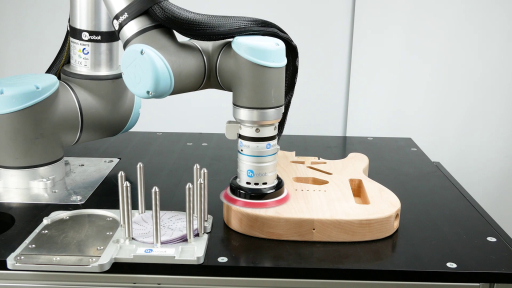
80%. That’s the massive reduction in sanding time EsVata Shutters enjoyed when they deployed robotic sanding on an intensive manual task, finishing wooden window shutters.
“If you talk to any woodworking person, I would say 90% or more would agree that sanding is one of the least fun things to do,” says Paul Hsieh, founder of EsVata Shutters. “Having a robot doing it is pretty amazing.”
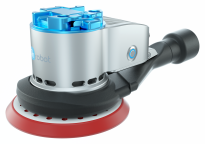
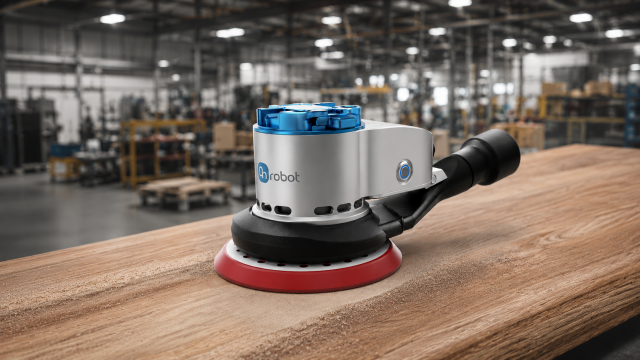
At EsVata, workers used to operate orbital sanders, leading to inconsistent results. By deploying the OnRobot Sander, EsVata Shutters has seen not just time but also significant quality improvements:
”By reducing sanding time, we haven't sacrificed quality. Our quality has increased about 20-30%,” says Hsieh.
EsVata Shutter’s experience isn’t an outlier. Many companies have achieved similar results by automating sanding, buffing, and polishing applications. But these tasks create unique challenges, and not all sanding technology can handle end user requirements or expectations around usability.
Finishing is sensitive to geometry, contact conditions, and force. Inconsistent path control can quickly turn a simple sanding task into scrapped parts or rework.
Sanding is harder to automate than it looks
Sanding isn’t just about moving abrasive discs across a surface. Sanding depends on continuous adjustment to force, contact angle, and surface variation.
On complex flat, curved, or spherical surfaces, contact conditions change with every movement. Programmed joint trajectory alone cannot guarantee consistent contact. Without active force control, small part tolerances produce unpredictable results.
Human operators can sense when contact is too light or heavy and can adjust pressure and angle accordingly in real time. Translating that adaptability into automation requires tools that can sense and respond, not just follow a pre-defined path.
Many traditional sanding automation attempts stall because systems that lack force feedback or rely on rigid fixtures end up producing uneven finishes or require extensive manual rework.