Adjust rotation speed from 1,000 to 10,000 RPM and choose path planning from hand-guided paths, shapes, or points. Replaceable standard pads help adapt the process to different materials, geometries, and finish requirements.

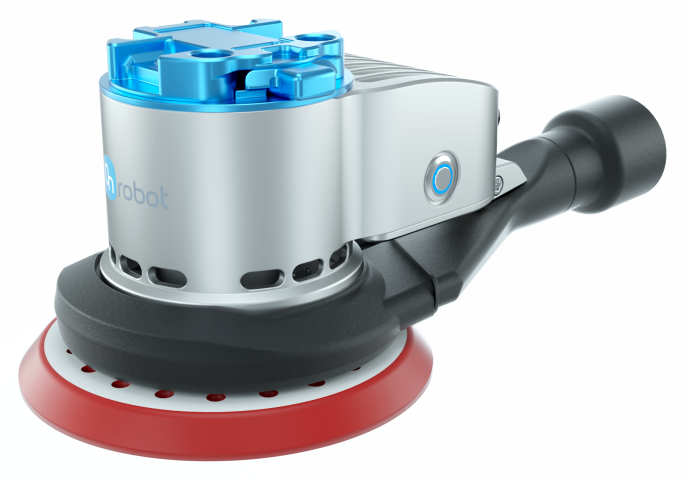
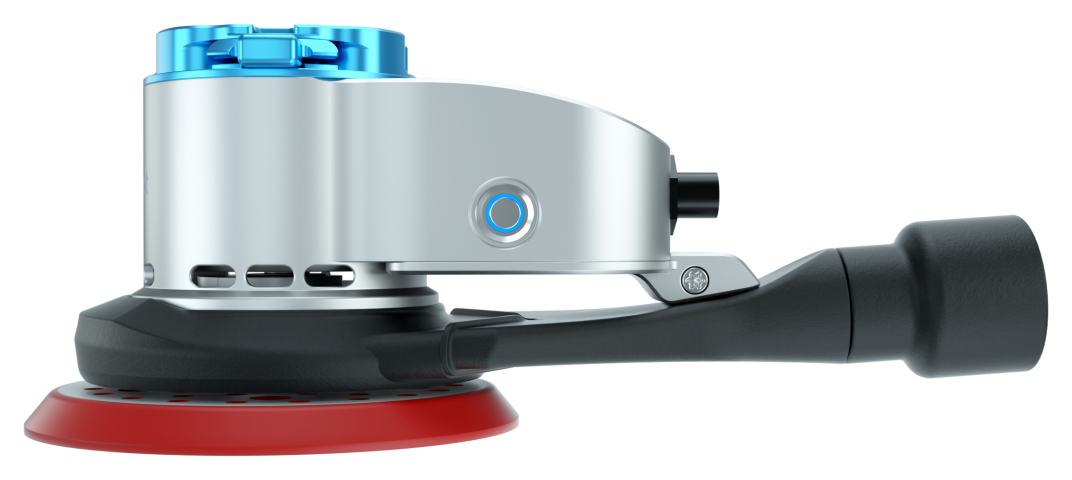
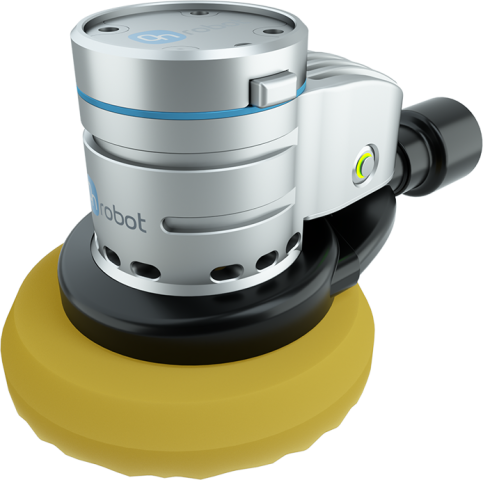
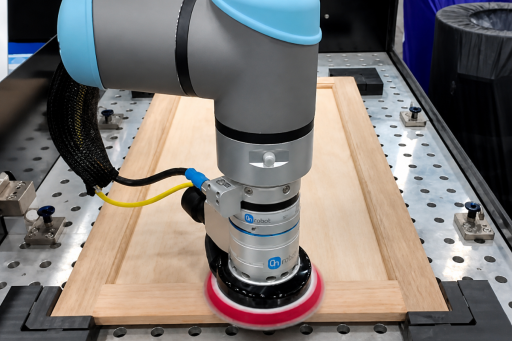
The all-electric Sander delivers 200 W of sanding power without an external air compressor. This simplifies the cell infrastructure and gives the process programmable control over rotation speed.
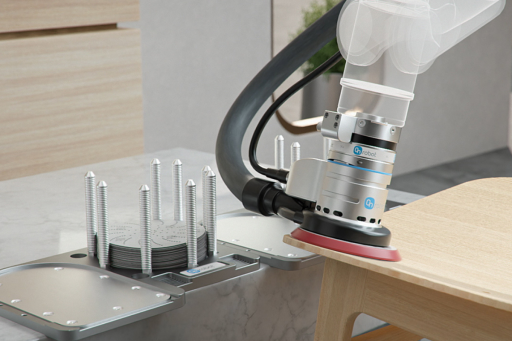
Adjust rotation speed from 1,000 to 10,000 RPM and choose path planning from hand-guided paths, shapes, or points. Replaceable standard pads help adapt the process to different materials, geometries, and finish requirements.
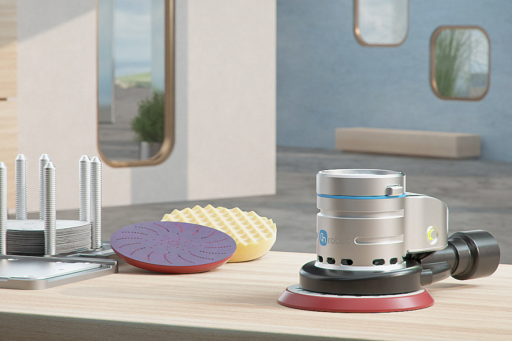
Add the optional Grit Changer to switch sanding discs automatically, or use an optional force/torque sensor to adapt to surface variation and part misalignment. These options help automate more of the finishing sequence.

















Integrated software provides path planning from hand-guided motion, shapes, or points. A save-position button on the tool can also simplify waypoint teaching for supported robot setups.
The Sander supports flat, curved, and uneven geometries. With the optional force/torque sensor, the process can adapt to surface variation or part misalignment for more consistent contact.
Automating sanding, polishing, and cleaning reduces operator exposure to hand-tool vibration and airborne dust. Standard 3M clean sanding discs also support dust extraction.
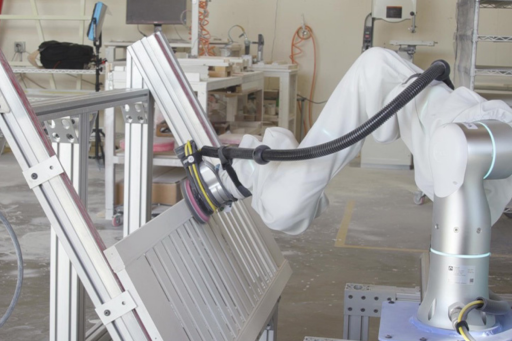
Use the Sander across wood, metal, plastic, composites, and other suitable materials for sanding, polishing, buffing, and cleaning. Adjustable speed, programmable paths, standard pads, and optional process accessories help one tool cover changing part geometries and finish requirements.
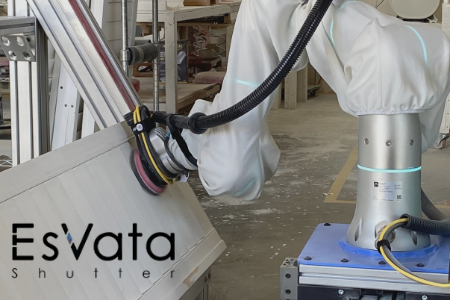
Tell us about the material, part geometry, target finish, abrasive sequence, robot, and production volume. Our local expert can help assess the pad setup, speed range, force control, dust extraction, and deployment path.