OnRobot

The Physical Interaction Layer for AI

Physical AI needs robots that can move from model output to real-world action.

That means grippers, tooling, and sensors that can grasp, sense contact, measure force, adjust actions, and generate useful model training data from physical interactions. OnRobot gives AI model builders, AI-first robotics companies, humanoid robotics teams, research institutions, and robot manufacturers a unified platform of electric grippers, force/torque sensors, and end-of-arm tools for training, validation, and real-world deployment.
Built for Physical AI

Physical AI may be new.

Electric, feedback-rich and flexible grippers are not.

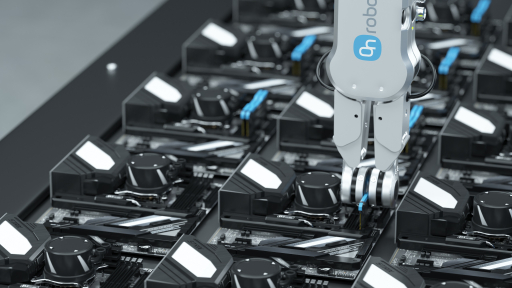
At OnRobot we have spent years building flexible electric grippers, sensors, and end-of-arm tools for real-world automation. More than 22,000 OnRobot products have been deployed globally in real industrial environments, research labs, universities, and schools. Physical AI enables robots that can handle dynamic unstructured environments, changing conditions, and multiple part sizes. OnRobot’s electric grippers are well suited to these requirements because they are flexible, programmable, and built for real-world manipulation.

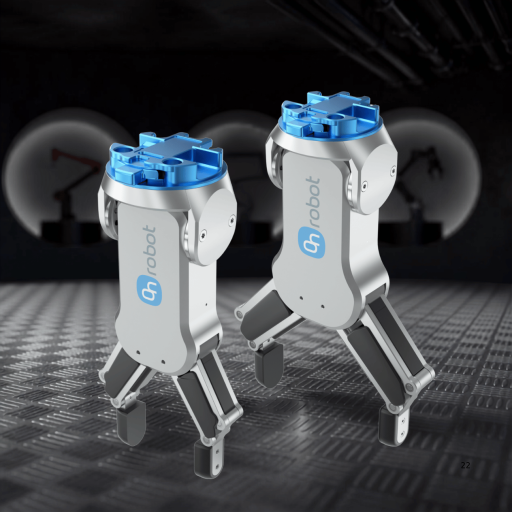
RG2/RG6 electric grippers
Flexible two-finger gripping for a wide range of object sizes and shapes.
RG2-FT
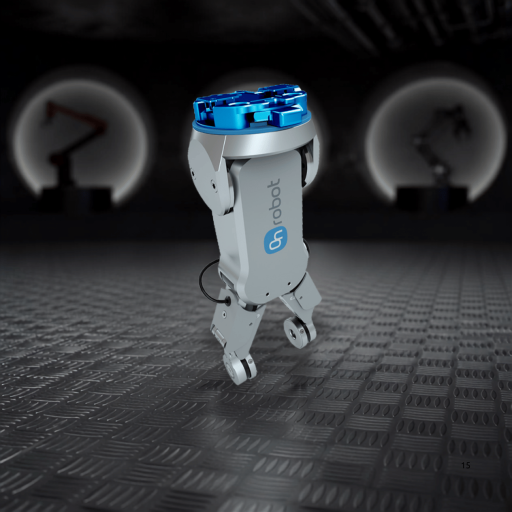
RG2-FT
Electric gripping with integrated force/torque and proximity sensing for contact-rich validation.
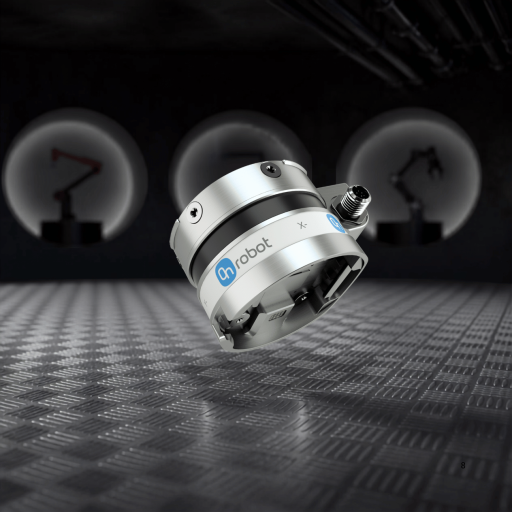
HEX force/torque sensor
Force/torque sensing for applications where physical interaction, alignment, and contact forces matter.

Read more about the 4 requirements of Physical AI in the real world

Capture the observations vision alone cannot detect

Vision shows what a robot sees. Force and torque feedback show what happens when the robot touches the world. F/T feedback helps answer key questions in manipulation tasks:

  • Did contact occur? 

  • How much force was applied? 

  • Did the object slip? 

  • Is the grasp stable? 

  • Did insertion succeed? 

For Physical AI applications, contact-rich manipulation requires an understanding of grip stability, resistance, slip, insertion force, part position, and task outcomes.  

OnRobot grippers and sensors help capture these physical observations during real robotic tasks.  

Physical AI needs contact-rich data

Manipulation is one of the core robotic applications for Physical AI, accounting for roughly two-thirds of recent research papers in the field.

But fewer than 20% of research papers incorporate force measurements, despite the central role of force control in physical interaction tasks.

Physical AI needs better ways to capture real-world interaction data.

~2/3
Physical AI papers focus on manipulation
Less than 20%
Incorporate force measurements
60%
Use fewer than 100 hardware demonstrations

Featured tool:

RG2-FT for contact-rich validation

RG2-FT combines electric gripping with integrated force/torque and proximity sensing. 

This helps Physical AI teams collect real-world manipulation data, validate robot behavior beyond simulation, and test how models perform when contact, force, and object variation matter

3–40 N adjustable gripping force Tune the grip to the task, object, and demonstration.
Up to 100 mm adjustable stroke Handle a wide range of object sizes and geometries.
Force/torque and proximity sensing Capture interaction forces during real manipulation tasks.
Integrated electric brushless DC motor Programmable electric gripping for repeatable real-world testing.

The physical AI cycle

Every command-feedback cycle improves task execution today and creates training data for tomorrow.
Step 1
Command
Tell the tool how to act
Step 2
Feedback
Capture what happens
Step 3
Adjust
Use feedback to improve
Step 4
Learn
Turn actions into data

OnRobot grippers, sensors, and end-of-arm tools help capture physical observations such as force, torque, width, grip state, proximity, contact events, and task outcomes during real-world manipulation.

Over time, this helps autonomy models learn better tool settings, better recovery actions, and better ways to complete similar tasks.

A practical platform for AI-first robotics

Need some sparring with an OnRobot automation specialist?

FAQ

Physical AI refers to robotic systems that learn from and act in the physical world. It connects AI models with real-world motion, contact, force, torque, sensor feedback, and task outcomes. 

The physical interaction layer is the hardware and tooling that connects AI models to real-world action. It includes grippers, force/torque sensors, end-of-arm tools, and feedback systems that allow robots to grasp, manipulate, measure contact, and capture useful observations during execution. 

AI-ready physical observations are signals from real-world interaction that can enable model training, validation, and deployment. Examples include force, torque, gripper width, proximity, grip state, tool state, part detection, errors, and task outcomes. 

OnRobot grippers such as RG2/RG6, 2FG7/2FG14, and RG2-FT can support Physical AI applications where flexible, programmable, real-world manipulation is needed. These tools can help teams test how models perform with different objects, part sizes, contact conditions, and task outcomes. 

HEX force/torque sensors can help robots measure physical interaction during tasks where contact, alignment, resistance, or applied force matters. This can support validation, feedback control, and the capture of real-world observations for manipulation tasks. 

Because many manipulation tasks depend on what happens during contact. Force and torque data can help robots understand grip stability, resistance, slip, insertion force, alignment, and failure conditions. 

RG2-FT combines electric gripping with integrated force/torque and proximity sensing. That makes it useful for collecting contact-rich manipulation data and validating robotic behavior in real-world tasks. 

Learning from demonstration depends on high-quality examples of real actions and outcomes. RG2-FT can help capture physical interaction signals during demonstrations, including force, torque, position, proximity, and task results. 

OnRobot tools allow robotics teams to compare expected behavior with real-world outcomes. By testing robot performance under physical conditions, teams can evaluate how models perform when objects vary, contacts shift, and real manipulation introduces uncertainty. 

Depending on the tool and setup, OnRobot products can provide feedback such as force, torque, position, proximity, tool state, part detection, grip state, and errors. 

Electric grippers are programmable, controllable, and feedback-capable. That makes them well suited to repeatable data collection, adaptive manipulation, and real-world validation. OnRobot’s electric grippers also have the flexibility to handle parts of different sizes, helping teams test how algorithms respond to real-world variability. 

No. OnRobot tools and grippers are designed for real-world industrial automation tasks. More than 22,000 OnRobot products have been deployed globally. For Physical AI teams, that means training and validation can happen with hardware built for real-world use. 

Yes. Where reliable, electric, feedback-rich end-of-arm tooling is needed, OnRobot tools can support humanoid and mobile manipulation teams working toward practical deployment.

Choose your language

Americas

English Português Español

Asia

简体中文 繁体中文 日本語 한국어 ภาษาไทย Tiếng Việt

Europe

English Čeština Dansk Nederlands Suomi Français Deutsch Magyar Italiano Norsk Polski Português Română Español Svenska Türkçe
English