OnRobot

Physical AI in the Real World

Four Requirements for Reliable Robot Manipulation

Physical AI promises robots that can perceive, adapt, and act in the physical world with far less task-specific engineering than traditional automation. 

It’s a compelling proposition: robots that learn from demonstrations, improve through experience, use vision and language models to interpret tasks, and operate in less structured environments.  

For robot developers, physical AI researchers and AI-first robotics teams, these capabilities enable applications that have traditionally been too variable, too costly, or too complex to automate. 

As physical AI systems move from simulation to real-world applications, the requirements change. Models and simulations remain essential, but robots ultimately interact with the physical world through arms, grippers, sensors and tools that make direct contact with objects. 

To move from research to deployment, physical AI needs a reliable physical interaction layer.  

This is what OnRobot has been building for more than a decade.  

Before ‘Physical AI’ became part of the robotics vocabulary, OnRobot was addressing many of the practical challenges that define physical AI research today, including adaptability, sensing, feedback, and the ability to handle real-world variation.   
 
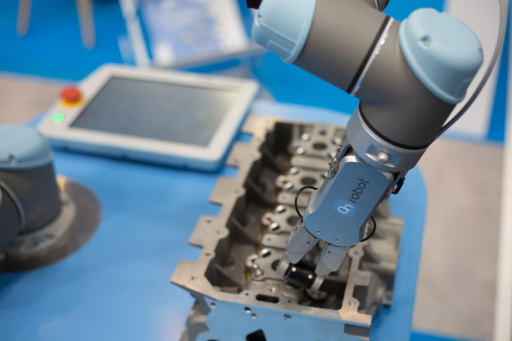
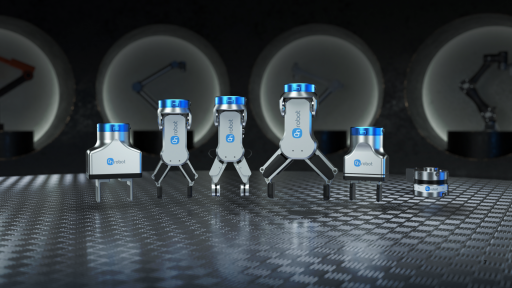
Our electric, flexible, and feedback-capable end-of-arm tools are designed to operate reliably in dynamic, real-world environments. More than 22,000 OnRobot products are deployed worldwide across a wide range of applications.  
1. Deployment requires repeatable physical interaction

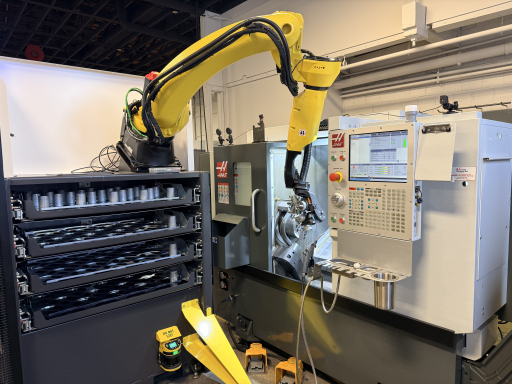
Performing a task in a controlled setting is one thing, deploying it under real-world variation is another.  

If a system cannot reliably handle variations in object size, shape, surface in different operating conditions, then the model’s intelligence has limited practical value. 

Adjustable gripping parameters and physical feedback can help systems repeat actions, detect variation, and confirm whether an interaction produced the intended outcome. 

OnRobot’s range of electric tools and sensors provide physical AI teams with reliable hardware for real-world interaction. 

2. More capable models require a reliable execution layer  

As foundation models, robot learning, vision-language-action systems, and simulation become more capable, the execution layer grows in importance.  

Robot motion is relatively mature compared with real-world manipulation. That’s because manipulation depends on physical variables that cannot be eliminated and cannot be modelled perfectly. 

That is why the end effector is so important. 

Simulation only
Simulation only
Models can generate actions, but hardware must execute those actions. Models can infer that an object should be picked up.
Physical element added
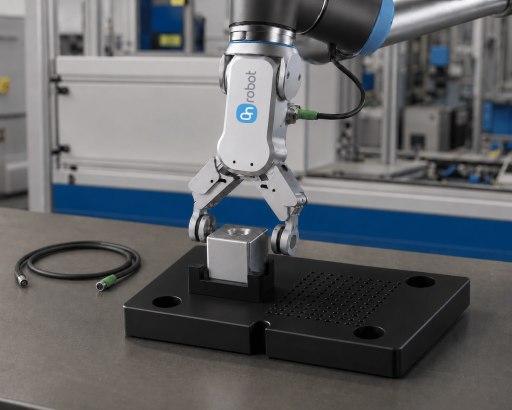
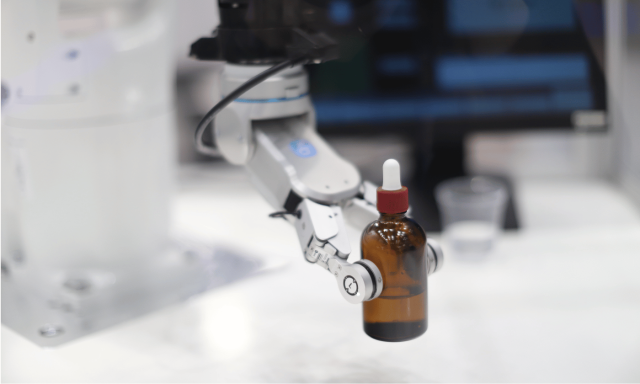
A physical gripper must make contact, apply the right force, detect whether the object is secure, and respond if something changes.

Interested in more physical AI news?

3. Contact-rich data complements simulation and vision

Simulation allows teams to train, test, and iterate quickly. Vision helps robots recognize objects, understand scenes, and plan actions. 

Reliable manipulation also requires physical feedback. For learning-based systems, more complete interaction data can improve training, validation, and failure analysis. 

Contact dynamics - including friction, compliance, slip, deformation, inertia, surface variation - are difficult to reproduce in simulation. A grasp that works in simulation may fail in the real world because the object shifts, the surface behaves differently, or the part resists contact.  

A camera can locate an object, but it cannot always determine whether that object is securely held. It may also miss subtle slip, asymmetric contact, insertion resistance, and excessive force.

These limitations make multimodal feedback an important part of physical AI.  

Different forms of feedback capture different stages of an interaction. Proximity sensing provides data before the robot makes contact. Force/torque sensing can provide information during contact. Grip detection can confirm whether the robot has secured an object. Gripper-width data provides information about the object and grasp state, while success and failure signals support learning loops.  

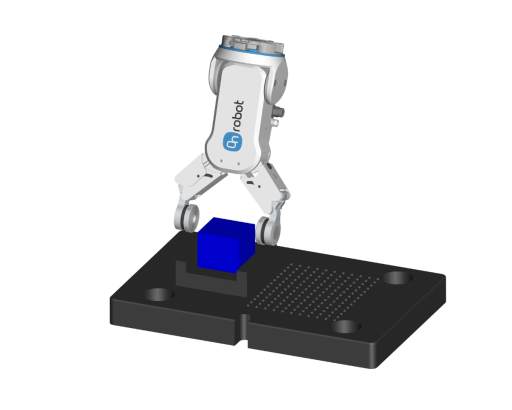
The RG2-FT gripper combines

Fingertip force/torque sensing
Proximity sensing
Grip detection
Force/torque data at the point of interaction


4. Flexible manipulation requires the right tool for each task 

Physical AI is often associated with general-purpose robots, but no single end effector is ideal for every task. 

Different objects and applications require different modes of interaction:  

  • 2-finger grippers suit many pick-and-place tasks.  

  • 3-finger grippers can handle round, irregular, or larger objects. 

  • Vacuum and magnetic tools simplify handling of suitable surfaces and materials. 

  • Force/torque sensors provide feedback for contact-rich tasks. 

  • Tool changers allow a robot to switch between end effectors. 

In practice, physical AI requires hardware flexibility as well as software flexibility. 

When robots are expected to handle variation, learn from experience, or operate across multiple tasks, the end effector becomes part of the system architecture. It determines what the robot can grasp, lift, hold, insert, press, pull, change, or release. It also affects the feedback available to the controller or model. 

OnRobot’s portfolio was built around this practical reality before physical AI became a headline term. Its electric, flexible, feedback-capable tools were designed to make it easier for manufacturers to deploy, adapt, and reuse automation across applications. 

That same design philosophy now aligns closely with what physical AI researchers and AI-first robotics companies need. 

Built for real-world variation 

The next phase of physical AI will depend on stronger models, better data, improved simulation, and more capable robot platforms. It will also depend on the physical interaction layer consisting of grippers, sensors, tool changers, and end-of-arm technologies that enable models to act reliably in the real world.  

End-of-arm tools are no longer simply the last component to be added to a robot. They are an integral part of advanced learning systems.  


OnRobot’s industry-proven portfolio gives researchers, robot developers, and manufacturers a flexible foundation for moving from promising models to reliable real-world manipulation.

Contact OnRobot to learn how our tools can support your physical AI applications.

Choose your language

Americas

English Português Español

Asia

简体中文 繁体中文 日本語 한국어 ภาษาไทย Tiếng Việt

Europe

English Čeština Dansk Nederlands Suomi Français Deutsch Magyar Italiano Norsk Polski Português Română Español Svenska Türkçe
English