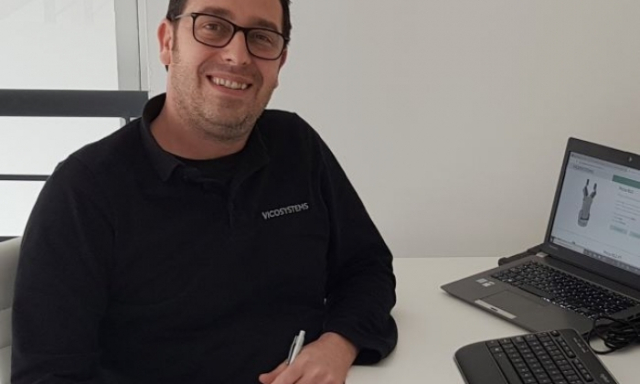
Enric Vila, Technical Director, Vicosystems - answering our questions on robotics
Read post

"The market for collaborative robots has changed a lot in recent years. At first, it was only metal companies that would use cobots, but today you see"
Read post

How can you win over sceptisism in your organization when it comes to collaborative automation?
Read post

How to get your production team on board with automation?
Read post

In this interview with OnRobot, Product Manager Matteo Bardelli from Homberger shares his views on the future of collaborative applications.
Read post

How to get started with automation and what is next in collaborative applications?
Read post

The five-step success guide to your first collaborative robotic automation process.
Read post

In this interview with OnRobot, Sales Manager Pascal Klee from Müller Maschinentechnik shares his views on the future of collaborative applications.
Read post

The lines between collaborative and industrial automation are starting to blur, so what should you choose? Peter Hern, Business Development Manager at Diverseco, Australia, sheds light on this frequent question.
Read post

"To me, the biggest advantage in the use of collaborative applications is the ability to work in close proximity...
Read post

In this interview with OnRobot, President Philip Courtois from Thinkbot Solutions shares his views on the future of collaborative applications.
Read post

Roberto Facchinetti, CEO at Alumotion, Italy - answering our questions on robotics
Read post