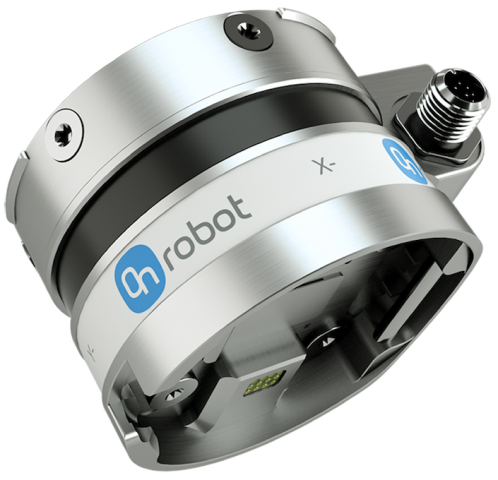
HEX-E prioritizes sensitivity for precise force-control work such as sanding and pin insertion. HEX-H provides higher torque capacity when the application uses a heavier payload or longer tool. Both variants share the same compact IP67 housing.

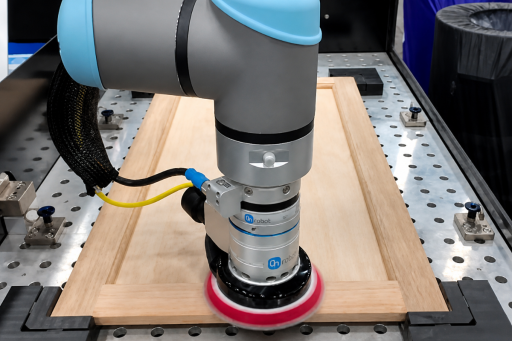
Maintain consistent contact force while sanding, polishing or deburring, even as the tool follows curved or uneven workpiece contours. Six-axis feedback helps the robot adapt its motion to the real surface instead of relying on position alone.
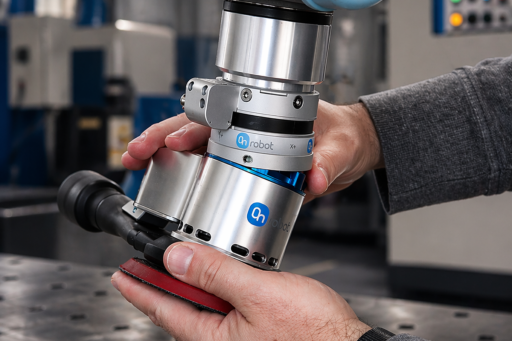
HEX-E prioritizes sensitivity for precise force-control work such as sanding and pin insertion. HEX-H provides higher torque capacity when the application uses a heavier payload or longer tool. Both variants share the same compact IP67 housing.
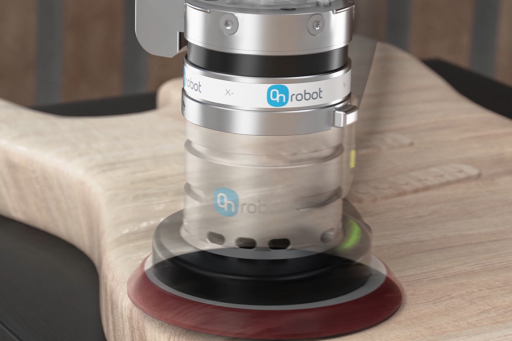
The optical sensing design resists sudden shocks, while the IP67-rated housing supports use in demanding production environments. Integrated software simplifies force-control setup, path recording and contact detection across supported robot platforms.

















Use six-axis feedback to maintain defined contact force while sanding, polishing and deburring. The robot can follow surface contours while reducing the risk of over- or under-processing.
Force feedback helps the robot search for position, detect contact and monitor insertion conditions in assembly tasks. This supports faster setup and more reliable handling of part variation.
Measure Fx, Fy, Fz, Tx, Ty and Tz in one compact sensor. HEX-E prioritizes sensitivity, while HEX-H supports higher torque capacity for heavier or longer tooling.
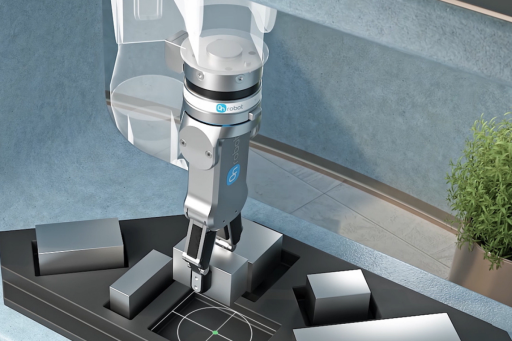
Add reliable force and torque feedback to sanding, polishing, deburring, assembly, insertion, part detection and quality-control tasks. HEX helps the robot respond to real contact conditions instead of following position alone.
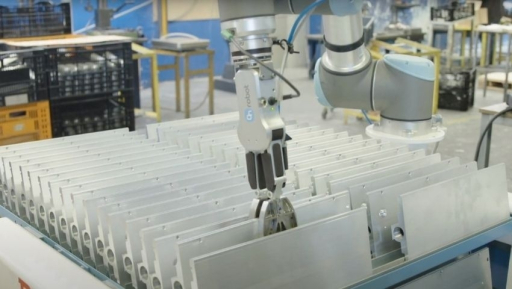
Tell us about your robot, tool, payload and process. Our local expert can help you choose between HEX-E and HEX-H and assess the right setup for your application.