OnRobot

Why Electric Grippers Are Changing Industrial Automation

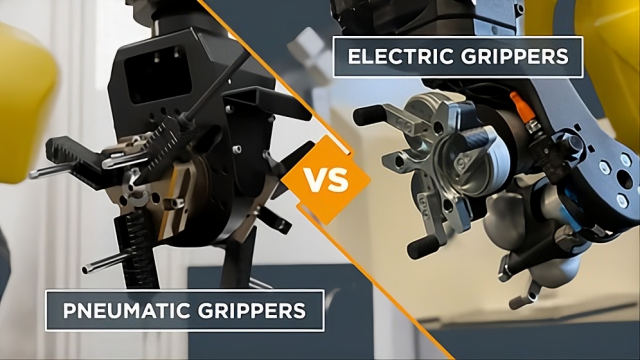
Manufacturers are under increasing pressure to produce more variants, reduce downtime, and maximize the return on every automation investment. While pneumatic grippers remain a proven solution for many repetitive applications, they can introduce additional infrastructure, maintenance, and changeover requirements as production becomes more flexible.

Estimated reading time: 6-7 minutes

Benefits of Electric Grippers

The transition to electric gripping isn't simply about changing technologies. It's about reducing the complexity of automation while improving flexibility.

Compared with traditional pneumatic systems, electric grippers can help manufacturers:

Reduce complexity. Increase flexibility. Improve return on investment.

Why Manufacturers Choose Electric Grippers

Electric grippers allow operators to configure gripping force, stroke, and speed directly in software.

Instead of adjusting regulators or mechanical stops, operators simply load new parameters when production changes. This improves repeatability while reducing setup time between jobs.

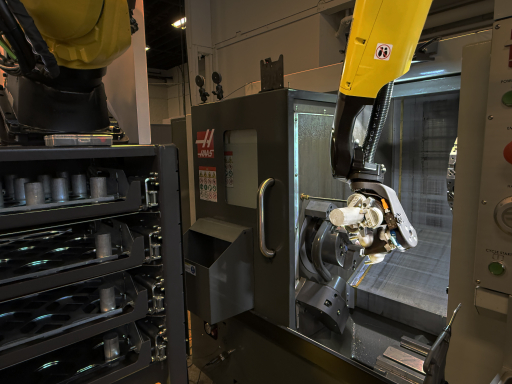
For applications such as CNC machine tending, programmable control helps ensure consistent loading and handling across varying workpieces.

Programmable Precision

✓ Programmable Grip Force

✓ Adjustable Stroke

✓ Software-Controlled Position

✓ No Mechanical Adjustment Required

Greater Flexibility Across Product Families

Many production environments handle dozens or even hundreds of different parts.

Rather than maintaining multiple dedicated grippers, manufacturers can often use one programmable electric gripper across a broader range of workpieces.

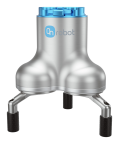
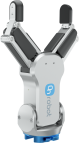
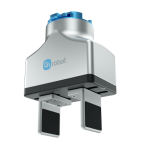
OnRobot offers electric grippers designed for different payloads and applications.

Faster Changeovers

Every mechanical adjustment reduces productive machine time.

Because electric grippers can be reconfigured digitally, operators spend less time changing tooling and more time producing parts.

This is especially valuable for manufacturers running multiple product variants throughout the week.

Pneumatic Changeover

Step 1
Swap jaws
Step 2
Adjust pressure
Step 3
Test
Step 4
Restart

Electric Changeover

Step 1
Select template
Step 2
Start production

Lower System Complexity and Total Cost of Ownership

The cost of a gripping solution extends well beyond the gripper itself.

Pneumatic systems typically require compressors, air lines, regulators, valves, fittings, and air preparation equipment.

Electric grippers reduce or eliminate many of these supporting components, simplifying both installation and long-term maintenance.

-

Pneumatic systems

Electric grippers

Air lines and fittings

Simplified wiring

Solenoid valves

Fewer control components

Regulators

Digital parameter control

Compressor capacity

No pneumatic installation lowering operating and maintenance costs

Multiple dedicated grippers

One programmable solution across more applications

-

Lower Operating Costs

Electric grippers help lower operating costs by using power only when movement is required, unlike pneumatic systems that depend on a constant compressed-air supply.

By reducing energy consumption, removing air-related components, and cutting routine maintenance, electric grippers can substantially reduce the everyday costs of running and maintaining an automation cell.

Key cost advantages include:

*Main assumptions:

1)     Electricity prices (kWh, USD) – estimated global average 2023-2026; USD 0.159

2)     Operation: 240 days of operation a year, 8 hours of continuous use per day

Built-in Feedback and Diagnostics

Electric grippers provide valuable grip and position feedback directly to the robot controller.

This allows manufacturers to confirm successful picks, identify abnormal conditions, and improve confidence during unattended production without relying on additional external sensors.

Electric vs. Pneumatic Grippers

Manufacturers evaluating automation often ask one question:

Should I continue using pneumatic grippers or switch to electric?

The answer depends on your production environment.

If you're running the same product continuously, pneumatic gripping might initially be an effective solution.

However, if your production involves multiple product variants, frequent changeovers, or unattended operation, electric grippers can provide significant operational advantages, and over time, the lower energy use, reduced maintenance, and simpler system design will often make electric grippers the better long-term choice.

Is an Electric Gripper Right for Your Application?

An electric gripper could significantly reduce complexity while improving flexibility and productivity.
Talk to an expert

Customer Success: One Electric Gripper Replaced Six Pneumatic Grippers

Technology claims matter.

Customer results matter more.

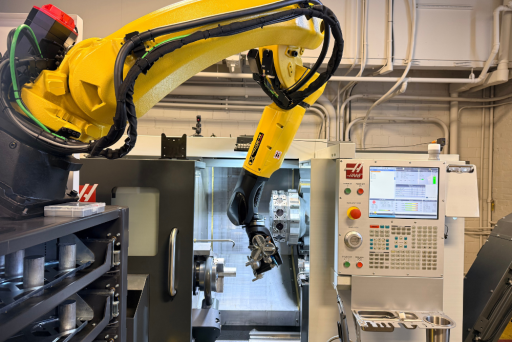
Automation Within Reach (AWR), a U.S.-based builder of CNC machine tending systems, needed a solution capable of handling a broad range of customer workpieces without increasing mechanical complexity.

Previously, multiple pneumatic grippers were required to cover different part sizes.

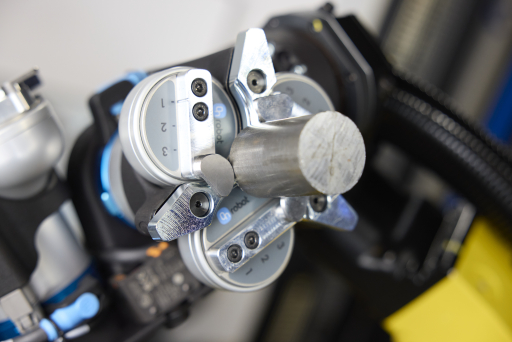
By standardizing on the OnRobot 3FG25, AWR replaced six pneumatic grippers with one programmable electric gripper.

Because gripping force and stroke are controlled digitally, the same gripper can adapt to multiple workpieces without mechanical adjustments.

AWR also developed a dual-3FG25 configuration that unloads a finished workpiece while loading the next blank during the same robot cycle, improving machine utilization and throughput.

Customer Success Story - Automation Within Reach (AWR)

Results

  • One 3FG25 replaced six pneumatic grippers

  • Mechanical adjustments eliminated

  • Fewer supporting pneumatic components

  • Greater flexibility for customer applications

  • Improved machine utilization with dual-gripper configuration

This customer example demonstrates that the greatest value often comes from simplifying the entire automation cell, not simply replacing one component.

The Bottom Line

Electric grippers are not simply pneumatic grippers powered differently.

They represent a shift toward automation that is more flexible, easier to deploy, easier to maintain, and better suited to modern manufacturing.

As the Automation Within Reach example demonstrates, simplifying the automation system can reduce engineering effort, improve uptime, and make future production changes significantly easier.

For manufacturers evaluating their next automation investment, the question is no longer simply:

"Which gripper costs less?"

A better question is:

Which solution creates the simplest, most adaptable automation system over the long term?

The Future of Gripping Is Simpler. Smarter. More Flexible.

Discuss your application and identify the right gripping solution.

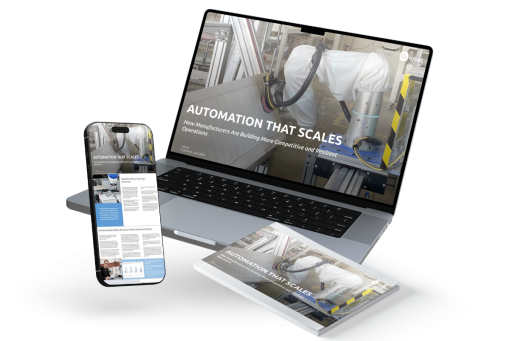
Ready for even more insights into electric end-of-arm tooling in industrial manufacturing?

Download our E-book

Choose your language

Americas

English Português Español

Asia

简体中文 繁体中文 日本語 한국어 ภาษาไทย Tiếng Việt

Europe

English Čeština Dansk Nederlands Suomi Français Deutsch Magyar Italiano Norsk Polski Português Română Español Svenska Türkçe
English